
Sciatica can often feel like temporary leg pain or a sudden muscle cramp, leading to widespread confusion. A sharp, shooting pain in the buttocks or the back of the thigh is one of the most common sciatica signs people in Brampton report to our clinic.
Identifying these symptoms early is crucial to preventing long-term nerve complications. In most mild to moderate cases, sciatica is highly treatable through physical therapy, chiropractic care, and conservative techniques. This guide covers the exact symptoms, causes, and proven fixes for sciatica so you can stay informed and get back to a pain-free life.
What is Sciatica?
Interestingly, sciatica is not a diagnosis. It is itself a symptom. It is a symptom of your sciatic nerve being pinched, compressed or irritated. To understand the whys and hows, we need to clarify the what’s first. So here’s the anatomy of your sciatic nerve.
The sciatic nerve starts in your lower back. It is formed of a bundle of five lumbar spine nerve roots that exit the spine and travel down the back of your buttocks, thigh and spread to your toes.
There is one sciatic nerve in each leg. It is responsible for helping you move your legs and feel sensations in your legs. Sciatica occurs when the sciatic nerve swells up or is compressed. Now the question is, what compresses the sciatic nerve?
A herniated disc or a narrowing of the spinal canal can lead to the static nerve compression and pain. Its a signal that a disturbance or misalignment in the spine has occurred and needs to be addressed.
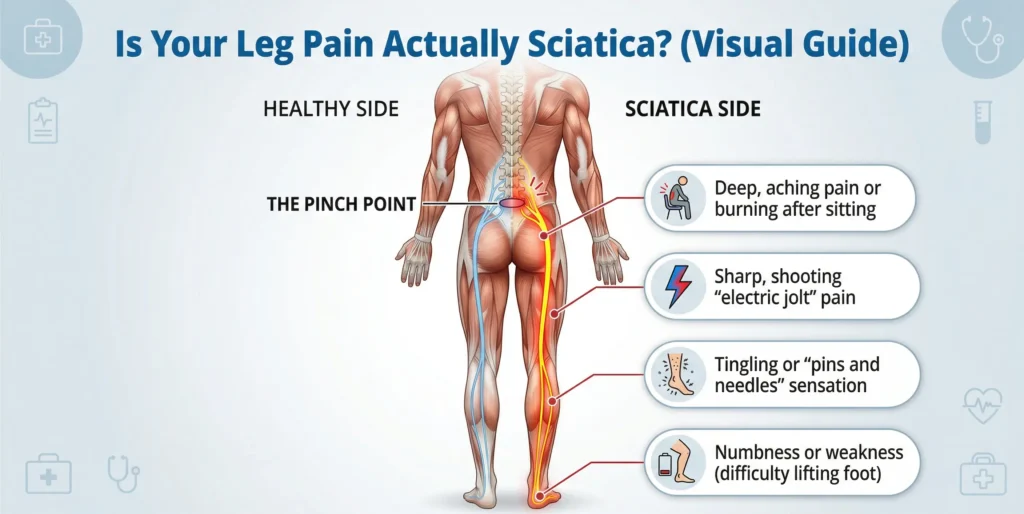
What Are the Most Common Signs of Sciatica?
Is it just a simple muscle strain or something deeper? This is often a query among our patients who come to ask for treatment for pain or movement problems. We have listed the most common symptoms of sciatica below so you can identify and take the right treatment at the right time.
A sharp, shooting pain that spreads: Sciatica pain typically originates in the lumbar spine, spreads through the glutes, and travels down the back of your thigh. If your leg pain follows this specific track, it is a classic sign of sciatic nerve involvement.
Pain affecting one leg at a time: Sciatic nerve compression usually happens on either the left or right side of your spine. You will likely feel intense symptoms in one leg while the other feels perfectly normal.
Neurological sensations: Because it is a nerve issue, you may experience burning sensations traveling down your leg, or numbness and tingling in specific patches of the skin.
Electric jolts while sneezing or coughing: Sneezing, coughing, running, or bending causes a spike in internal spinal pressure. If you have sciatica, this pressure creates a sudden lightning bolt of pain.
Muscle weakness: In advanced cases, the nerve compression disrupts signals from your brain to your muscles. You might struggle to lift the front of your foot (drop foot) or stand on your tiptoes.
What Are the Early Warning Signs of Sciatica?
Before sciatica becomes a constant, sharp pain, it often begins with subtle changes in how your lower body feels. The early warning signs include:
- A deep neggings in the lower back or glute
- Sharp or burning sensation in the buttocks after prolonged sitting
- Mild tingling or pins and needles sensation in the calf muscles or foot
Recognizing the early signs is a first step in the sciatica pain relief process. Listen to your body. Stay alert. Do not panic if you experience any of the symptoms because there are several evidence-based conservative treatments for sciatica. You can go to a doctor or book an appointment at a multi-disciplinary clinic for an accurate diagnosis and rehabilitation.
Sciatica vs. Common Lower Back Pain
It is easy to confuse general back pain with sciatica. But both conditions are different and require treatment plans. Here is a table distinguishing between the two and highlighting their unique characteristics.
| Feature | General Back Pain | Sciatica | Location | Localized: Stays in the lower back or “belt line” area. | |||||||||||||||
| Sensation | Dull & Achy: Feels like a deep muscle throb or stiffness. | ||||||||||||||||||
| Sharp & Electric: Searing heat, jolts, or “pins and needles.” | Movement | Improves: Light walking or stretching often “loosens” it up. | |||||||||||||||||
| Neurological | None: No numbness or weakness in the feet or toes. | ||||||||||||||||||
A sudden twinge in your back can feel like a sciatica symptom. But what if that is not the problem? Self-diagnosing based on a single symptom often leads to the wrong treatment plan. So get a clinical assessment done to identify the exact source of your problem and how you can relieve the pain.
What Causes Sciatica Nerve Pain?
Sciatica is a physical response to a mechanical issue in your spine or pelvis. While the pain is felt in the leg, the source is almost always the back. Common causes include:
Herniated or bulging discs: The soft inner core of a spinal disc leaks and presses against the nerve root.
Lumbar spinal stenosis: A narrowing of the spinal canal that houses the nerves.
Spondylolisthesis: When one vertebra slips forward over another, pinching the nerve.
Piriformis syndrome: A tight piriformis muscle in the buttocks spasms and traps the sciatic nerve.
Whether the pressure is coming from a disc, a narrowed spinal canal, or a tight piriformis muscle, the goal remains the same: removing the obstruction to let the nerve heal. Understanding these causes helps shift the focus from merely masking the leg pain to addressing the structural source in the lower back.
How Can You Relieve Sciatica Pain Without Surgery?
In most cases, therapy or exercises can help reduce symptoms. It is only in extremely severe cases that surgery is recommended. Talk to a professional to understand what the best treatment is for you before jumping to any conclusion. Here, we are going to talk about conservative, non-invasive methods that address the structural cause of nerve compression rather than just numbing the symptom.
Spinal Decompression Therapy: Gently distracts the spine, creating a vacuum effect that pulls herniated disc material away from the nerve, giving it room to heal.
Chiropractic Adjustments: Corrects misaligned joints and restores proper mechanics to the lumbar spine, reducing the physical pinch on your nerve roots.
Physiotherapy: Reduces inflammation around the nerve and improves core stability to prevent future flare-ups.
Also read: Do I See a Chiro or Physio for Sciatica?
Corrective Nerve Gliding Exercises: Specific movements that allow the sciatic nerve to slide smoothly through surrounding tissues without being pulled tight.
Massage Therapy: Releases tension in the deep tissues (like the piriformis muscle) to stop protective muscle spasms that further compress the nerve.
Sciatica can be treated by one or a combination of several treatments. It depends on the severity of your symptoms, your lifestyle and underlying cause. A multi-disciplinary approach combines different clinical perspectives to create a specialized environment for the nerve to heal faster and stay healthy longer. A combination of chiropractic care, physiotherapy and massage therapy can not only treat the pain but also improve your spinal health for a healthy future.
Conclusion
Are you tired of guessing whether that shooting pain in your leg is sciatica? Stop letting pain dictate your daily routine.
Once you identify the signs of sciatica, the most effective step is to consult with a professional for an accurate clinical diagnosis. At Physiotherapy First in Brampton, our team of physiotherapists, chiropractors, and massage therapists work together to treat the exact source of your nerve compression. We provide comprehensive, customized treatment plans to ensure long-term, preventive care.
Take the first step toward a pain-free life today. Contact Physiotherapy First to book your assessment.