
If you are experiencing tingling sensations, numbness or pain in your fingers, it can be Carpal Tunnel Syndrome (CTS). You should consult with an orthopedic or physiotherapist as quickly as possible to get the right diagnosis and treatment at the right time. CTS is a progressive chronic condition affecting the median nerve running through an inch-wide passageway (carpal tunnel) in your wrist. It gets worse with time. But getting the right treatment can help you manage the condition and prevent it from progressing. This blog discusses the most common natural and alternative treatments for carpal tunnel syndrome pain besides surgery.
Carpal tunnel syndrome can be scary to deal with, especially if your livelihood depends on your hands. But there are ways to manage this condition and keep the pain in check. Your doctor runs diagnostic tests to confirm CTS. Then they prepare a treatment plan based on your level of pain, severity of symptoms and other factors.
How To Know If You Have Carpal Tunnel Syndrome?
We have discussed the symptoms of CTS in this blog. The common signs include tingling sensations, numbness and sometimes pain and later a loss of grip strength. Visit a doctor or talk to your nearest physiotherapist if you are experiencing any one of the symptoms.
This is a list of ways healthcare professionals use to diagnose carpal tunnel syndrome.
Consultation about the symptoms- The healthcare professional asks questions about your symptoms to identify a pattern common in CTS.
Wrist examination– They assess your hand and wrist to determine the severity of the condition. Your doctor may ask you to bend your wrist in different positions or tap the median nerve to test the strength of your hand and if there’s any swelling in the area.
Ultrasound & x-ray– Your doctor may recommend an x-ray or ultrasound to see if it’s the median nerve that is compressed and causing CTS symptoms.
Electrodiagnostic tests- These tests are conducted on your nerves to diagnose carpal tunnel syndrome.
Diagnosis is a crucial step in CTS treatment. Once the doctors confirm it’s carpal tunnel syndrome, they can customize a treatment plan specific to your symptoms.
What are the Common Treatments for Carpal Tunnel Syndrome?
The treatments for carpal tunnel syndrome depend on the individual’s age, medical history, symptom severity and personal preference. Surgery is recommended if the symptoms are too severe to be managed naturally. For mild/moderate carpal tunnel syndrome, there are alternative treatments that work best if you address your symptoms early.
Alternative Treatments for Carpal Tunnel
Bracing/Splinting
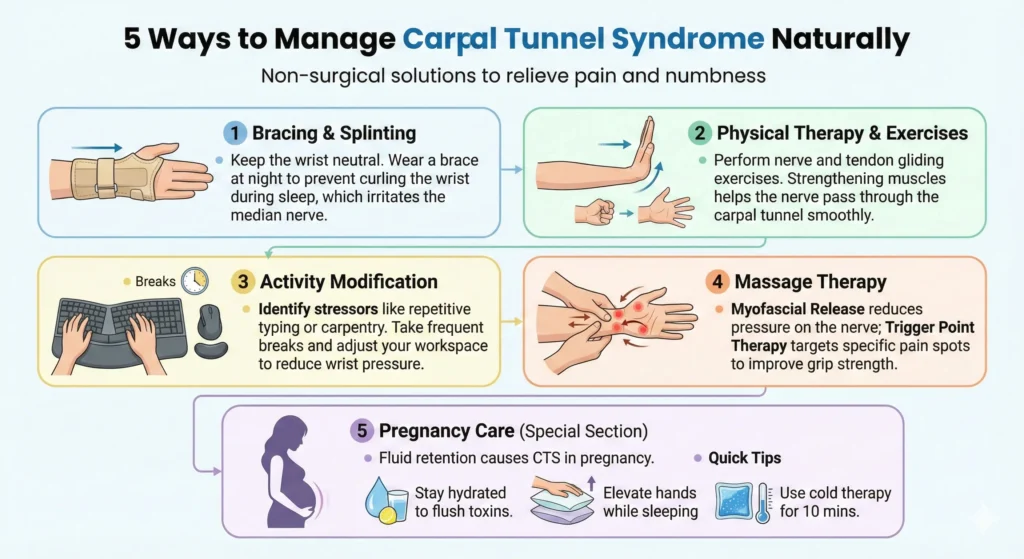
Are your symptoms worse at night, so much so that the pain wakes you up in the middle of the night? In such cases, doctors prescribe wearing a brace or splint at night to keep the wrist in a neutral position while the person is sleeping. During sleep, we often tend to curl our wrists, which can irritate the median nerve, causing symptoms of carpal tunnel syndrome. Doctors may also prescribe wearing a splint while you are doing activities that typically aggravate CTS symptoms.
Exercises
A physical therapist guides you through specific hand-strengthening, mobility and stretching exercises. These movements enable the median nerve to pass through the carpal tunnel smoothly without being compressed by the inflamed tissue in the wrists. The exercises also improve wrist stability and blood circulation in the area. The right exercises, especially nerve and tendon gliding stretches, can help heal the compressed neural tissues if supervised by a registered physical therapist.
Non-steroidal Medicines
Your doctor may prescribe non-steroidal anti-inflammatory drugs (NSAIDs) available over the counter. These medicines help reduce inflammation and pain associated with CTS. Medicines are prescribed by a doctor only after a confirmed diagnosis. You should consult with your doctor first to know which medicines to take and for how many days.
Steroid Injections
Doctors may recommend injecting steroids into the carpal tunnel space for mild/moderate carpal tunnel syndrome symptoms. The injection may feel uncomfortable at the moment. But it has shown effective results in reducing the symptoms for several weeks or months. In most cases, the symptoms wear off temporarily, and your doctor may repeat the injection.
Activity Changes
Does your job involve repetitive hand and wrist motions such as typing or carpentry? These are high-risk occupations that put constant internal pressure and friction on the median nerve within the carpal tunnel, leading to irritation. To manage and prevent CTS, you should identify and minimize the physical stressors that cause carpal tunnel syndrome symptoms. Make ergonomic adjustments at work so your wrist is in a neutral position while you’re working. A smart change in everyday activities can help prevent the condition from worsening.
When is Surgery Recommended for CTS?
Doctors recommend surgery for carpal tunnel syndrome if the symptoms are severe. The goal of surgery is to make more space for the median nerve and tendons to glide through the carpal tunnel without the risk of being compressed. It takes at least two weeks to recover completely after surgery. Your doctor may restrict specific activities after surgery for up to three weeks or more, depending on your recovery rate.
What’s the Carpal Tunnel Syndrome Treatment in Pregnancy?
Carpal tunnel syndrome is very common in pregnancy as the blood volume, fluid retention and hormonal changes increase. There is swelling everywhere in the body, including the wrist, due to the accumulation of extra fluid. This swelling puts pressure on the median nerve in the carpal tunnel, causing CTS in pregnant women. In most cases, the symptoms resolve on their own within weeks after delivery as their fluid levels stabilize.
Carpal tunnel syndrome treatment for pregnant women primarily focuses on conservative, non-invasive methods. Here are the common treatments doctors may prescribe for CTS during pregnancy.
Wrist splinting– Wearing a neutral splint at night prevents your wrists from curling during sleep.
Elevation- Keeping the affected hand on pillows while sleeping or resting can relieve pain.
Cold therapy- Applying ice packs to the wrist for 10 minutes can provide relief.
Hydration– Staying hydrated helps your body flush toxins and excess fluids efficiently.
Breaks– Taking frequent short breaks if you are still working can help relieve the pain.
Besides these, in some cases, your doctor may prescribe medicines or steroid injections if they are safe for the patient. If you are pregnant and experiencing carpal tunnel symptoms, do not panic. It is normal. Talk to your doctor and get the help you need.
Is Massage Treatment for Carpal Tunnel Syndrome Effective?
Yes, a combination of massage therapy and exercises can be effective in treating carpal tunnel syndrome. Your physical therapist may recommend a few sessions with a registered massage therapist after assessing your symptoms. Two types of massage therapies are commonly used to treat carpal tunnel symptoms.
Myofascial release therapy– It involves a series of rhythmic movements that focus on reducing pressure on your median nerve. Consistent sessions help relieve pain while improving your grip strength and range of motion.
Trigger point therapy- This technique involves putting steady pressure on specific areas of your body called trigger points. A licensed physical therapist is trained in trigger point therapy and is the best individual you should consult with.
A study suggests that massage and trigger point therapy are effective treatments for carpal tunnel syndrome. Your physiotherapist may recommend massage therapy as a part of your treatment plan, along with exercises based on your symptoms and needs.
Conclusion
Carpal tunnel syndrome is a painful, progressive disorder causing tingling sensations in the hands and fingers, followed by pain and lack of hand strength. Pregnant women are also prone to this condition due to the excess fluid buildup during pregnancy. The good news is that you can treat the problem and restore your functional lifestyle with a little bit of effort and discipline. You should consult with doctors or physiotherapists for a thorough assessment and accurate diagnosis. The commonly effective treatments include wrist splinting, physical therapy, NSAIDs, steroid injections, and surgery. An effective treatment plan is customizable. It differs based on your individual preferences, lifestyle and recovery needs.