Effective Ways to Relieve Neck Pain from Sleeping Wrong

You went to sleep just fine. The next morning, you wake up with a sore neck. It doesn’t let you move your neck as you are supposed to. Basic activities like driving, typing, screen toggling, gaming or household chores get challenging. A mix of three strategies can give you immediate relief. Start with heat therapy (10 minutes). Next, perform gentle stretches like slow chin tucks to relieve neck muscle strain. Finally, correct your posture while you work, stand, sit or sleep to prevent further straining. This blog discusses these strategies in detail and some realistic steps you can take to relieve neck pain from sleeping wrong.
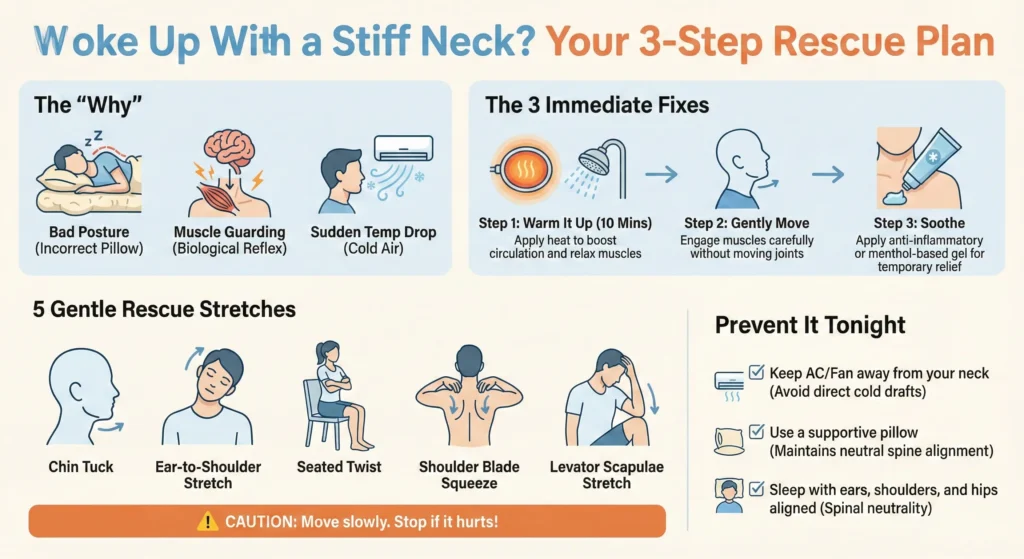
What Causes Neck Pain From Sleeping Wrong?
Strain in the neck muscles results in neck pain and stiffness. Sleeping in an incorrect posture can stress the neck muscles for several hours. The next day, you end up waking up with a sore neck. So, yes, sleeping “wrong” can cause neck pain. Let’s understand why.
Poor Sleep Posture
Yes, not many people realize this, but your sleep posture plays an integral role in triggering neck pain in the morning. When you sleep in an awkward position, you put your neck under prolonged cervical stress/strain. In a neutral position, your spine supports your head effortlessly. However, if the head is tilted in one direction for hours, the ligaments and tendons are stretched beyond their comfortable limit, leading to stiffness.
“Muscle Guarding” Response
“Muscle guarding” is a biological reflex due to which your neck feels physically stuck after you wake up. This is connected to the poor sleep posture discussed above. When the brain detects that a joint is at risk or a ligament is overstretched, it sends a signal to the surrounding muscles to contract and stay contracted. This is a way your body prevents you from moving further and causes a more serious injury to the nerves or spinal cord.
Incorrect Pillow
You spend hours on your pillow. The pillows for neck support keep your head, neck and spine in a neutral alignment. The wrong one, however, doesn’t support your neck as it should. For example, if a pillow is too high, it forces your neck into a forward position. An abruptly flat pillow, on the other hand, causes your neck to collapse sideways. It keeps your neck muscles under tension all night while you sleep.
Sudden Temperature Drops
If the temperature in your room drops suddenly, it can cause the neck tissue to contract sharply. This cold-induced muscle tension is most likely to turn into a spasm the moment you wake up in the morning. This also happens if you sleep with the AC unit or fan blowing cold air directly on a stretched neck muscle.
Abrupt Movement in Sleep
When you bolt upright or move your head suddenly in deep sleep, these sudden movements can overstretch the ligaments. This causes your brain to trigger an immediate muscle guarding response, and you wake up with a locked neck.
Previous Injury
Previous injuries like whiplash, sports concussions or repetitive strain can aggravate your chances of waking up with a sore neck. This is why you must mention old injuries to your therapist, even if the injuries happened years ago.
A sore neck from sleeping wrong may sound trivial to some. But this common problem can interfere with your daily life and may resurface again. So, it is crucial to understand the “why” so you can fix the problem at its core instead of just masking the symptoms.
What are the Immediate Fixes To Reduce Neck Pain From Sleeping Wrong?
Note: Relieve neck pain from sleeping incorrectly through gentle activation rather than trying to stretch it out aggressively. Consult a physiotherapist if it persists for over 24 hours.
Apply Heat Therapy
You are most likely to realize the neck stiffness right after waking up while trying to look at your phone. Do not panic or try to roll out of bed. Remember, your neck muscles at the time are cold and in a state of “guarding”. Take it slow. Take a hot shower or use a heating pad for 10 minutes on the affected area. This boosts blood circulation and relaxes the muscle.
Do Gentle Stretching
Gentle stretching helps relieve neck tension and muscle spasms. The goal is to engage the muscle without moving the joint. Gentle stretching exercises are effective, but you should do them with caution. Gentle movements are the key to relieving muscle tension, where your brain sends signals that it is safe to engage those muscles without injury.
Apply a Topical Gel
You can apply a topical anti-inflammatory or menthol-based gel on your neck to manage the pain temporarily. This is helpful, especially when you have to head into a gaming session or overcome your writing block.
It can be tempting to get rid of the neck stiffness or pain since it takes a toll on your entire day. But it is recommended to talk to a healthcare professional first. They can guide you through the stretches and other practical stiff neck remedies that can relieve your neck pain from sleeping incorrectly.
5 Gentle Stretches to Relieve A Stiff Neck
Specific gentle movements can put your neck muscles back to their relaxed state. But you shouldn’t have to force the stretches. Perform them slowly. Focus on deep breathing rather than intensity.
Chin Tuck: Sit or stand tall, looking straight ahead. Without tilting your head up or down, slowly glide your head straight back, creating a “double chin.”
Ear-to-shoulder stretch: Slowly lower your right ear toward your right shoulder. Keep your shoulders “heavy” and down. Don’t let your shoulder shrug up to meet your ear.
Seated twist: Sit at the edge of your chair with your feet flat. Cross your arms over your chest. Slowly rotate your upper body to the left as far as comfortable, then to the right.
Shoulder blade squeezes: Imagine there is a pencil between your shoulder blades. Pull your blades back and down to “pinch” the pencil, keeping your neck long and relaxed.
Levator scapulae stretch: Turn your head 45 degrees to the right (looking toward your knee). Tuck your chin down as if trying to smell your armpit. Use your right hand to apply a very light, downward pull.
Caution: Do not continue at all if it hurts.
This is a glimpse of the most common stretches involved in managing a stiff neck. The right exercise for your recovery may be different. So, for the best outcomes, talk to your nearby physio and then perform the stretches.
How to Sleep Correctly for Pain-Free Mornings?
Here’s what you can do to adopt a healthy sleep posture.
Choose the right pillow- Your pillow should act like a solid structural support for your cervical spine. It depends on your primary sleeping position. Your doctor/therapist can assess and recommend what’s best for you.
Set the correct temperature- Ensure that the AC or fan do not blow directly onto your neck. This keeps the neck muscles warm.
You should sleep in spinal neutrality where your ears, shoulders and hips are in a straight line. A sore neck can occur if this alignment isn’t maintained or is disturbed while you are sleeping.
How to Prevent A Sore Neck From Happening?
Preventing a stiff neck requires more than just a good pillow. It requires your neck to be able to manage the physical and chemical stress your spine endures throughout the day. A healthy, conscious lifestyle can protect your neck muscles and keep them relaxed yet functional without troubling you with stiffness or pain. Here are some realistic tips for you to relieve neck pain from sleeping wrong.
Get rid of the ‘tech neck’ posture: Do you spend most of your daytime looking at phones or laptops? When you spend hours like this leaning forward, you train your muscles to stay in a shortened, tight position. It’s already inflamed before you sleep. The chances of a sore neck increase when your muscles are already fatigued.
Drink enough water: Your spinal discs are the shock absorbers of your neck. They are primarily made up of water. Staying hydrated helps the discs stay in shape and cushioned, thereby reducing your chances of neck stiffness/pain.
Take breaks from work: You don’t need a 15-minute gap to save your neck. Short, frequent bursts of movement are more effective than one long break at the end of the day.
Follow the 20/20/20 rule: Reset your posture consciously in the middle of your work to ensure that you don’t slouch for a long period of time. Every 20 minutes, look 20 feet away for 20 seconds and perform three Chin Tucks to reset your posture.
Conclusion
A sore neck is annoying, especially when you encounter it right after waking up. Don’t worry because stress makes things worse. Instead, get up gently from your bed and apply a heat pad for 10 minutes. Then perform some gentle stretches as discussed here. If you have to go to work, apply an anti-inflammatory gel for temporary relief. Most importantly, adopt a healthy sleep posture and a healthy lifestyle to prevent the problem from recurring. Take frequent, short breaks from work, adjust work ergonomics, stay hydrated and listen to your body’s cues to keep your neck in a neutral alignment.
Frequently Asked Questions
1. What causes neck pain from sleeping in the wrong posture?
Neck pain from sleeping in the wrong posture is caused by prolonged cervical stress and strain, which can stretch ligaments and tendons beyond their comfortable limit, leading to stiffness and soreness.
2. How does poor sleep posture contribute to neck pain?
Poor sleep posture puts the neck under prolonged strain by tilting or misaligning the head and neck, resulting in muscle stiffness, guarding responses, and morning neck pain.
3. What immediate steps can I take to relieve neck pain from sleeping wrong?
You can start by applying heat therapy, doing gentle stretches to relieve muscle tension, and using topical gels to temporarily manage pain, always consulting a healthcare professional if pain persists.
4. What are some gentle stretches to help with a stiff neck?
Gentle stretches include chin tucks, ear-to-shoulder stretches, seated twists, shoulder blade squeezes, and levator scapulae stretches, all performed slowly and without forcing movements.
5. How can I sleep correctly to prevent neck pain?
Choose the right pillow suited for your sleeping position, set the room temperature to avoid cold-induced muscle tension, and sleep in spinal neutrality with ears, shoulders, and hips aligned to reduce neck strain.
Blog Categories
- Acupuncture Treatment (10)
- Ankle Sprain (1)
- Arthritis Treatment (1)
- Back Pain (23)
- carpal tunnel (2)
- Chiropractic Care (41)
- Tennis Elbow (1)
- Chronic Pain (7)
- COVID-19 (1)
- Custom Orthotics (6)
- Dizziness (4)
- Exercises (14)
- Foot Orthotics (6)
- Hamstring Stretches (2)
- Info Articles (3)
- Kids Injury (1)
- Laser Therapy (4)
- Massage Therapy (21)
- Neck Pain (18)
- Orthopedic (1)
- Osteoarthritis (6)
- Osteopathy (3)
- Pain Management (25)
- Physiotherapy Benefits (47)
- Physiotherapy Clinic (6)
- Physiotherapy Exercises (13)
- Physiotherapy Tips (25)
- Physiotherapy Treatment (104)
- Rotator Cuff (2)
- Sciatica (1)
- Shin Splints (1)
- Shoulder (2)
- Spinal Decompression Therapy (1)
- Spine (4)
- Sports Physiotherapy (2)
- Ultrasound Therapy (1)
- Uncategorized (1)
- Vestibular Physiotherapy (2)
- Work From Home (2)