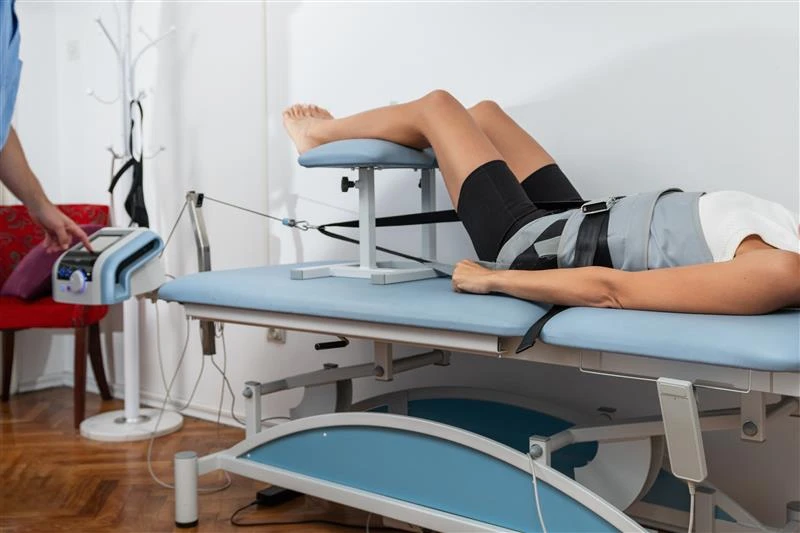
Does back pain interfere with your daily life, including even the basic activities that otherwise would be effortless? If you are looking for non-surgical back pain relief, this guide is for you. Non-surgical spinal decompression therapy is a non-invasive & effective alternative fix for chronic back pain. It is a motorized traction therapy that relieves pressure off spinal discs and nerves, promoting natural healing. In some cases, however, your healthcare provider may recommend surgical spinal decompression for long-term relief. This blog discusses the science behind spinal decompression therapy, its benefits and whether it’s right for you
This blog discusses the science behind spinal decompression therapy, its benefits, and how to know if it is the right treatment for you.
What is Spinal Decompression Therapy?
Spinal decompression is a treatment approach designed to release pressure from spinal discs and nerves. This pressure can compress your spinal column and pinch the nerves running down along with it, causing back pain. Collapsed, bulging or herniated discs can cause compression and “pinch” the nerves, resulting in pain. The goal of spinal decompression is to take this unwanted pressure off your spinal structures and bring you relief.
The Science Behind Spinal Decompression
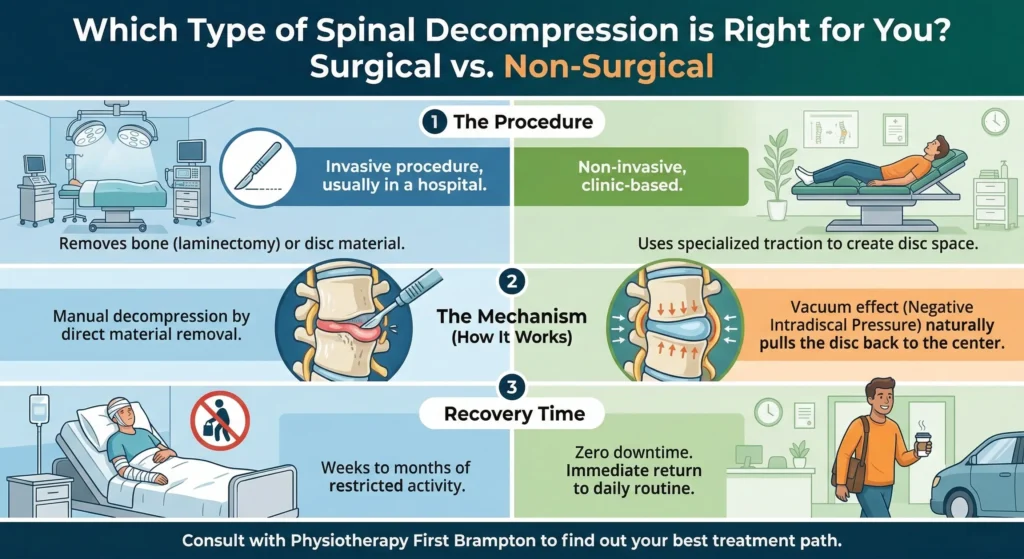
This therapy works through a biomechanical process called distraction. By gently stretching the spine, the decompression table creates a vacuum effect within the affected spinal discs, clinically known as negative intradiscal pressure.
This vacuum effect serves two purposes. First, it helps pull the herniated or bulging disc material back into its proper central position. Second, it stimulates the flow of healing nutrients into the disc space.
Surgical vs Non-surgical Decompression
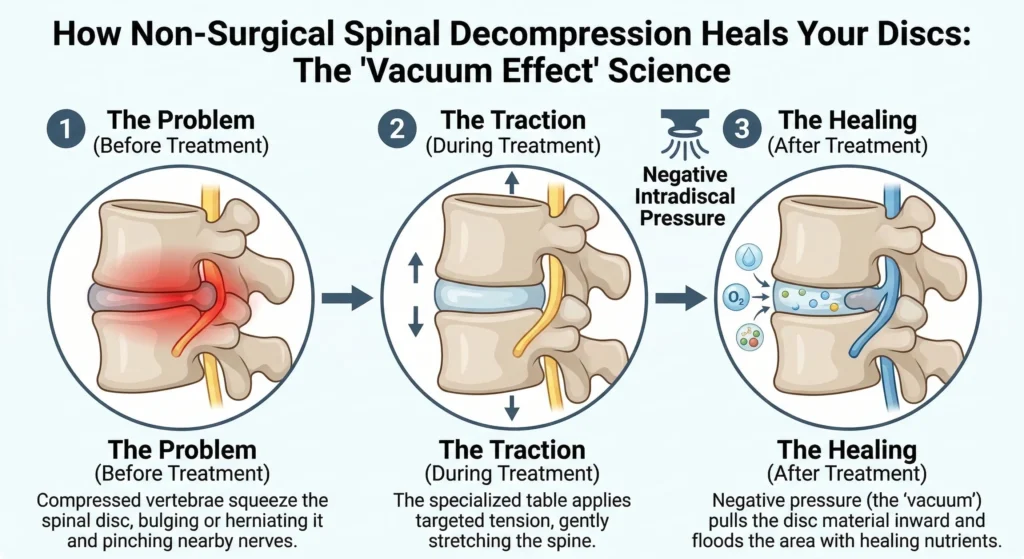
The end goal is the same, that is, to provide you relief, but the approaches are entirely different.
| Feature | Non-Surgical (Clinic-Based) | Surgical (Operating Room) | Medical Approach | Uses tension to create space and heal the disc naturally. | |||
| Invasiveness | Non-Invasive | Invasive | Mechanism | Relies on the vacuum effect to pull the disc away from the nerve. | |||
| Recovery | No downtime; usually involves a series of 15–25 minute sessions. | ||||||
5 Key Benefits of Spinal Decompression Treatment
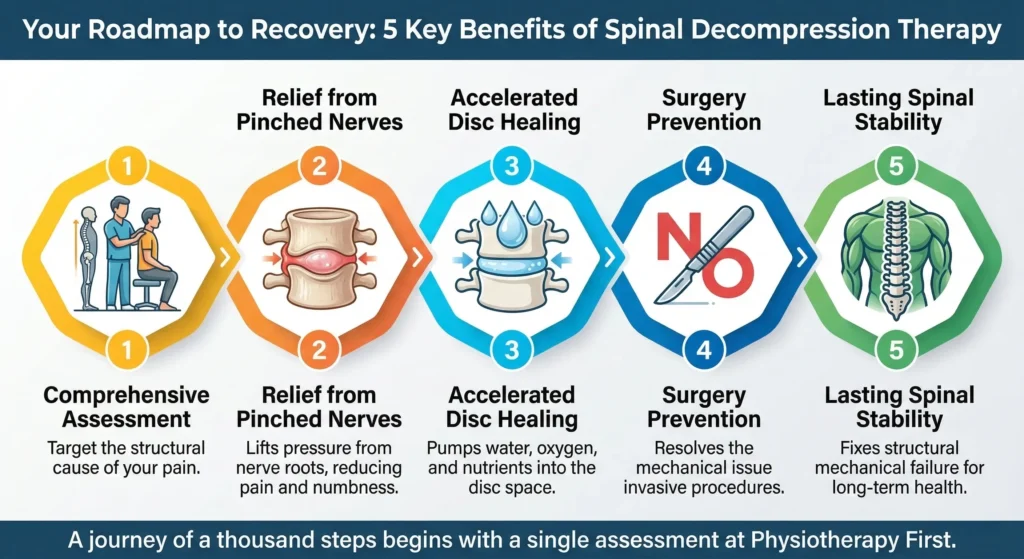
Spinal decompression is mostly known for treating back and neck pain. But it can also help fix problems arising from accumulated pressure within spinal discs. Here are 5 key benefits of this therapy.
1. Targeted Relief for Pinched Nerves
Accumulated pressure in the spinal column pinches the nerve roots and causes pain. Spinal decompression creates space between the vertebrae, which lifts the pressure off the nerve roots. This provides direct relief from symptoms (that arise due to a pinched nerve) like numbness, tingling sensations, and pain.
2. Accelerated Healing
The spinal discs are some of the only parts of our body that don’t have a direct blood supply. It relies on a process called diffusion to get the essential nutrients it needs to stay nourished. The vacuum effect that decompression therapy creates acts like a pump, pulling oxygen, water, and healing nutrients into the disc.
3. Faster Recovery
Surgical decompression therapy can sideline you for months or weeks. The recovery is also not easy. Non-surgical spinal decompression, on the other hand, has zero downtime. It involves no anesthesia, scarring or recovery period. You can, if your doctor allows, head straight back to your daily routine right after the session.
4. Rehabilitation At its Core
Spinal decompression doesn’t merely mask your symptoms. Rather, it addresses the crux of the problem- the mechanical failure of the disc. As the decompression therapy repositions the disc material and restores the disc height, it fixes the structural issue leading to long-term spinal stability.
5. Prevention of Surgery
Often, this therapy acts like a non-invasive alternative to surgery for treating back pain. The pain is most likely to subside if you get the symptoms checked at an early stage. The non-surgical spinal decompression therapy can take care of the problem without you having to go under the knife. In severe cases, however, your doctor may recommend surgery.
Which Conditions Does Spinal Decompression Treat?
Spinal decompression is specifically engineered to fix mechanical issues of the spine. It benefits conditions where the structural integrity of your spine is causing nerve interference. Below are the primary conditions where this therapy is highly effective.
Bulging or herniated discs
Degenerative disc disease
Sciatica
Facet syndrome
Spinal osteoarthritis
Scoliosis-related pain
Spinal decompression is highly effective for treating sciatica, especially when caused by disc herniation. If you are wondering whether a chiropractor or a physiotherapist is the right choice for your specific sciatica symptoms, read our dedicated comparison guide here.
Who Should Avoid It?
While safe for most, spinal decompression is not suitable for everyone. You should avoid this therapy if you have:
Advanced Osteoporosis
Pregnancy
Spinal Metal Implants (Screws, Plates, or Cages)
Severe Spinal Instability (Spondylolisthesis or Recent Fractures)
Spinal Malignancy (Active Tumors)
Abdominal Aortic Aneurysm
Discitis (Spinal Infection)
Spinal decompression is not safe for everybody. Talk to your chiropractor or doctor for a thorough assessment of your injuries so they can tell you if it’s right for you.
What Happens During a Typical Session?
The idea of a ‘motorized table’ sounds intimidating. But don’t worry. The sessions are customized to make you feel comfortable and stress-free as much as possible. So, let’s see what to expect from your typical non-surgical spinal decompression therapy session.
The Setup: Simple and Convenient
The non-surgical therapy doesn’t require a lot of your effort. You remain fully clothed throughout the entire process. You lie down on a specialized, computer-controlled table. Two comfortable harnesses keep you positioned in such a way that allows the table to apply precise, targeted tension to the specific level of your spine.
How Does It Feel During the Process?
You feel a gentle, rhythmic pull or a deep, oscillating stretch during the treatment. The computer adjusts the force according to your recovery needs.
How Many Sessions Do You Need?
Spinal decompression is a cumulative therapy. The entire treatment is about retaining the spine and rehydrating the discs over time. The number of sessions you would need depends on your unique needs and the severity of your symptoms. A standard protocol typically involves 12-20 sessions spread over several weeks.
How to Maximize Outcomes from Spinal Decompression?
Spinal decompression is a powerful tool. But, it works best or rather shows maximum results, when supported by daily habits. A supportive lifestyle helps boost the effectiveness of this therapy.
Core Strengthening
Decompression creates space between the vertebrae. Physiotherapy and targeted chiropractic exercises help build the structural support to hold that space. This combination supports your spine health, preventing the vertebrae from collapsing back into a compressed state once therapy ends.
Posture & Ergonomics
A poor posture or ergonomic setup can cause spinal injuries. So, it is crucial to make small changes at your workstation so your spine is not stressed while you work. Keep the monitor at eye level. Use a chair with proper lumbar support. That prevents slouching, which in turn puts excessive pressure on your lower discs.
Role of Hydration
Staying hydrated ensures your spinal discs receive the essential nutrients and blood supply they need to stay nourished. Spinal discs are made largely of water. Drink plenty of fluids to keep the discs fully hydrated and help them regain their natural cushioning height.
Final Thoughts,
Spinal decompression is an effective alternative treatment to manage back pain. There are two types of decompression: surgical and non-surgical. You may not need the former at all if the symptoms are not that severe and are treatable by the non-surgical spinal decompression therapy. It works by creating a vacuum effect within the spinal column. This vacuum relieves pressure from the spinal discs and nerves, providing you with relief. It largely works for reducing chronic back pain. You can talk to your chiropractor in Brampton to learn if spinal decompression is right for you.
If you are dealing with unresolved back pain, you don’t have to suffer in silence. Reach out to the team at Physiotherapy First in Brampton to book an assessment and find out if spinal decompression therapy is the right path to your recovery.