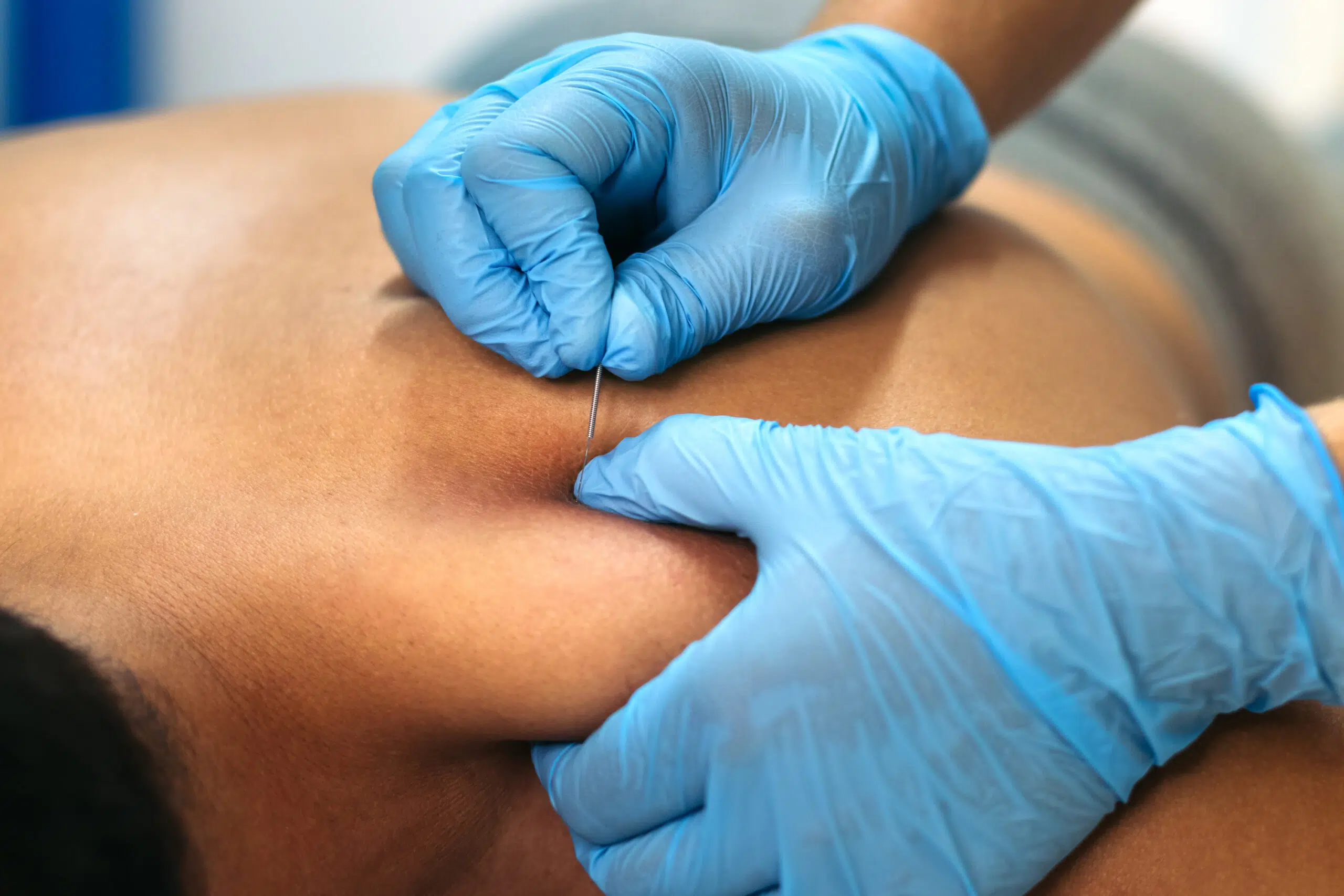
Both acupuncture and dry needling use very thin monofilament needles to treat muscle pain and stiffness. But they are not the same treatment. While acupuncture focuses on restoring the energy balance in your body, dry needling relieves muscle pain & stiffness. Acupuncture is a century-old practise based on Traditional Chinese Medicine, whereas dry needling is a modern-day practise often used as a part of rehabilitation programs. The best way to know which one you need is to discuss the symptoms with a qualified practitioner. The debate surrounding acupuncture vs dry needling is common because both use paper-thin needles to treat problems.
In this blog, we will compare both treatments in detail, so you know which one is right for you. We will discuss the differences and similarities in terms of their treatment approach, purpose, needle placement, conditions they treat, safety and what each treatment feels like.
Are Acupuncture and Dry Needling the Same Thing?
No, acupuncture and dry needling are two different treatments. Both use very thin monofilament needles and inject no medication into your body. However, their approach differs. While acupuncturists insert the needles along the body’s meridian channels, which are believed to carry energy, dry needling practitioners place them at or near the affected muscles, nerves or joints.
What Do They Have in Common?
The key similarities between acupuncture and dry needling are discussed below. These are the main reasons why people often confuse the two.
- Use of solid, paper-thin needles: Both dry needling and acupuncture use very thin needles, which are very different from the ones used in syringes.
- Skin penetration: Both treatments involve inserting needles into the skin.
- Pain management: Dry needling & acupuncture both help reduce pain & improve range of motion.
- Trained & regulated healthcare professionals: The professionals in both categories are trained and regulated by a specific regulatory body unique to each practise.
- Potential overlap in some treatment settings: Multidisciplinary clinics often provide acupuncture and dry needling services in similar-looking treatment rooms.
What are the Differences?
The main differences between acupuncture and dry needling are discussed below.
- Clinical framework: Acupuncture is based on Traditional Chinese Medicine (TCM) and is primarily guided by acupuncture points, energy distribution and meridians. Dry needling, on the contrary, is a more modern practise and focuses on anatomy, physiology and musculoskeletal principles.
- Treatment goals: Acupuncture aims at restoring the energy balance in our body, which in turn improves your overall physical and mental health. Dry needling, however, focuses on reducing musculoskeletal conditions that cause pain and stiffness.
- Assessment: The acupuncturist uses a TCM-specific assessment to detect the exact underlying problem, such as symptoms, pulse & tongue findings. Dry needling assessments involve a thorough & complete musculoskeletal and functional examination.
- Needle placement: In acupuncture, the needles are placed at specific acupuncture points as assessed by the professional. Dry needling practitioners, however, insert the needles at or near specific trigger points, which are the affected anatomical structures.
Acupuncture vs. Dry Needling: What’s the Difference?
| Factor | Acupuncture | Dry Needling |
| Treatment Approach | Century-old practise based on Traditional Chinese Medicine (TCM). | Modern-day practise based on anatomy, physiology and musculoskeletal structures. |
| Main Goal | Physical concerns like pain management and an overall boost in mental health. | Musculoskeletal conditions associated with muscle tension, stiffness and pain. |
| Assessment | The acupuncturist assesses your symptoms, past treatments, family’s medical history, digestive health, diet, emotional health, sleep patterns, pulse on both wrists and the tongue’s colour and coating. | Dry needling practitioners assess your symptoms, range of motion and muscle function. |
| Needle Placement | An acupuncturist inserts the needles at specific acupuncture points. Acupuncture points are specific spots in your meridian channels that distribute energy throughout the body. | The practitioner inserts the needles at or near the trigger points responsible for your pain or reduced mobility. The trigger points are discrete and hyperirritable spots in your skeletal muscle. |
| Who provides the treatment? | Acupuncturists should be registered by the College of Traditional Chinese Medicine Practitioners and Acupuncturists of Ontario. | Dry needling is an additional clinical practice that regulated physiotherapists may be trained and authorized to provide. |
How Does Acupuncture Treatment Work?
Acupuncture works by restoring the energy balance in your body. Energy, or qi, according to Traditional Chinese Medicine philosophy, flows through our body and keeps us healthy, mentally and physically. When this energy is disrupted, it can create various health problems.
Here’s a brief overview of how acupuncture works.
Traditional Chinese Medicine and Acupuncture Points
In Chinese Medicine, acupuncture points or acupoints, are specific spots along the meridians or energy distribution channels, of the body. There are 14 meridians, and each is connected to specific organs of the body. Acupuncturists insert the needles at specific acupoints, depending on your symptoms and the cause of the condition. Once the needles touch the acupoints, it triggers a series of physiological reactions, which help the body heal.
Where Are Acupuncture Needles Placed?
The needles are inserted at specific acupuncture points identified by the acupuncturist. The depth may differ, depending on the severity of your symptoms and recovery needs. It could be anything between a fraction of an inch and about 2 inches.
What Is Acupuncture Commonly Used For?
Acupuncture can help treat physical and mental health issues. It may help manage chronic pain in conditions like arthritis, back pain, neck pain, muscle pain, headaches, migraines and sports injuries. It is also believed that acupuncture benefits mental health patients with conditions like depression, anxiety, stress and panic attacks.
How Does Dry Needling Treatment Work?
Trigger point dry needling works by restoring blood circulation in the affected musculoskeletal structure. The dry needling practitioner inserts the needles into specific trigger points, which stimulates blood flow in the injured area and releases endorphins, the natural painkillers of your body.
Here’s a detailed overview of how dry needling works.Targeting Muscles and Trigger Points
Physiotherapists or physical therapists who are trained in dry needling identify the trigger points first to begin the treatment. A trigger point is a hyperirritable and palpable spot on a muscle fibre and causes localized pain in the body. It develops when a muscle is overused and deprived of oxygen and nutrients due to poor blood supply. Professionals identify the points, which usually look like a tight, tender and sensitive-to-touch area on the muscle. These are the points where the therapist inserts the needle to help patients get relief.
What Happens When the Needle Reaches a Trigger Point?
Once the needle touches the trigger point, it restores normal blood circulation in the injured area, reducing muscle tension. It may also stimulate your brain to release the natural painkillers (endorphins), which in turn reduces the pain.
What Conditions May Be Treated With Dry Needling?
Physiotherapists may use dry needling for muscle pain as a part of their treatment plan. Here are some other musculoskeletal conditions that may benefit from dry needling
- Arthritis
- Tendonitis
- Temporomandibular issues
- Carpal tunnel syndrome
- Tennis elbow
- Headaches
- Migraines
- Spine problems
What Conditions Can Acupuncture and Dry Needling Help With?
Acupuncture and dry needling deal with similar symptoms. But both practises approach the symptoms differently. An acupuncturist uses the conventional TCM framework to assess the problem and choose the specific acupoints that need utmost attention. Dry needling practitioners conduct a complete musculoskeletal assessment to identify the trigger points. They recommend dry needling as a part of a larger rehabilitation program.
Here are some conditions that may benefit from both acupuncture and dry needling. But their treatment approaches differ. Let’s take a look.
Muscle Pain and Tension
Let’s consider dry needling for muscle pain. The practitioner first examines your entire musculoskeletal system to identify the underlying cause of the pain. They may identify specific trigger points in the affected muscles and may include them in the treatment plan. Acupuncture treatment, however, focuses solely on TCM-specific assessment, where the professional identifies the acupuncture points based on the findings.
Neck and Shoulder Pain
Both acupuncture and dry needling can be used to manage discomfort, muscle tension, restricted movement and pain in the neck & shoulder. Dry needling practitioners may assess the muscles and movement patterns before choosing the trigger points. Trained acupuncturists may locate the acupuncture points in the neck & shoulder region.
Back Pain
A person experiencing back pain may be recommended either dry needling or acupuncture for pain relief, depending on their individual assessment and treatment plan. Dry needling practitioners may assess the back muscles and other tissues to identify the trigger points. Acupuncturists use the TCM framework to locate the acupuncture points in the back region.
Which Treatment is Better for Pain Relief?
Choosing between dry needling vs acupuncture for pain relief depends on your health goals, symptoms and personal preference. Both have their own set of benefits and risks.
Note: This is just a generic suggestion. Each patient may have individual recovery needs. Consult with a licensed professional to know which one is right and safe for you.
When You May Consider Acupuncture Instead of Dry Needling?
Acupuncture can be used for chronic pain symptoms such as back pain, knee pain, and shoulder discomfort. It may also be recommended to improve energy balance or your mental well-being.
When You May Consider Dry Needling Instead of Acupuncture?
Dry needling may be effective for musculoskeletal conditions that cause muscle pain & stiffness and reduced range of motion. It can offer quick relief, making it a suitable choice for immediate relief.
How Do You Choose Between Acupuncture and Dry Needling?
The choice between acupuncture vs dry needling depends on your health goals, symptoms, medical history, and professional assessment. You can decide which one you want after consulting with an expert.
Here’s a simple tip that might help you get a direction.
Identify your main symptoms
Muscle pain symptoms may be manageable with dry needling, while acupuncture treatment may help with mental health issues like anxiety. It can be a bit confusing, as both treatments can help with the same symptoms such as pain, restricted movement or an injury. But the assessment of these symptoms can help figure out which one is right for you.
Set your treatment preferences/goals
Do you want quick relief or a long-term solution for your pain? Do you want a complete musculoskeletal assessment or just the TCM-specific assessment for the painful areas? While acupuncture is believed to provide long-term support, dry needling may offer more targeted and quicker relief.
Talk to a qualified practitioner
It can be confusing to select the ‘right’ treatment because both treat similar symptoms. Thus, it is recommended to consult with a trained and licensed practitioner who can help you understand dry needling vs acupuncture effectiveness.
Do You Need Help Choosing Between Acupuncture vs Dry Needling?
It is common to get confused between acupuncture and dry needling because they both use very thin, monofilament needles to target specific points in your body for relief. But they are NOT the SAME treatment. While acupuncture is based on Traditional Chinese Medicine, dry needling is a more modern practice based on Western Medicine. They can also treat similar symptoms, which further complicates it to pick one. At our multidisciplinary clinic, Physiotherapy First, you will find both qualified dry needling practitioners and licensed acupuncturists. Discuss your symptoms with us, and we will help you decide on an effective treatment.